In this section:
- Components for collaboratives to succeed
- Challenges for rural communities
- Strategies to bolster bandwidth
State and local entities can support community economic development by providing targeted trainings to local stakeholders to fill capacity gaps to develop outdoor recreation businesses.
Most of our rural communities are in desperate need of additional capacity to advance their outdoor driven development goals. They need capacity to help seek the funding and resources necessary to support their work, and they need access to qualified grant writers to help secure funding to complete their projects.
Communities are smart to begin with a needs assessment of core competencies to understand where they are particularly strong and where they could use additional support, on topics including:
- Grantwriting
- Local/Regional Planning
- Communications, Marketing, and Branding
- Relationship Building
- Research and Data
- Conservation and Recreation Expertise
- Infrastructure Development
- Business Support
These assessments can be various degrees of formality, and can help to identify gaps and create targeted programs to meet needs.
For example, the Building Outdoor Communities program of Made X MTNS WNC provides grants and technical assistance to align key stakeholders, create outdoor infrastructure and economy priorities, and develop implementation guidance to advance the work at the county and regional scale across 25 counties in the state.
Professional development for community leaders is often a big gap. Folks have many responsibilities and there is a tendency to take action rather than do a training. But professional development includes things like attending conferences and workshops to learn how others have collaborated on rural economic development.
These administrative challenges for a small town can be difficult when considering applying for federal grants, which require NEPA compliance, reporting, and/or additional policies and procedures (for instance, a traffic management plan requirement from a state Department of Transportation).
To mitigate these challenges, community and state leaders cited utilizing or planning to create resources including:
- Leadership development academies (focused on growing visitation, increasing school populations, maintaining hospitals, building affordable housing, and enhancing outdoor recreation infrastructure to support healthy lifestyles)
- Outdoor Recreation Incubator Grants and Business Accelerators to support the development of programs that assist early-stage outdoor businesses
- Grant writing training and awareness of notice of funding opportunities
- Clear and accessible lists of grants, loans, and technical assistance that support outdoor recreation
- Economic data and research on the benefits of outdoor recreation
- Marketing and branding services
- Entrepreneurship workshops and workforce trainings
- Conferences and events
- Toolkits to combine the resources above and others
Sometimes increasing professional development for existing employees isn't enough—rural nonprofits are doing many tasks at once and simply need more staff to accomplish programmatic and operational objectives.
Using AI Tools to Build Capacity
AI tools can't replace staff or local relationships, but they can take some of the drafting, summarizing, and organizing off a small team's plate. Rural organizations can use them to:
- Get a head start on grant applications. Produce a first outline or draft of a narrative section, then rewrite it in the community's own voice, with its own data.
- Make sense of long funding guidelines. Summarize a notice of funding opportunity, list its eligibility requirements and deadlines, and check a draft application against the scoring criteria.
- Prepare community engagement materials. Draft survey questions, meeting agendas, and plain-language summaries of plans, and produce first-pass translations for residents who read other languages, to be checked by a fluent speaker.
- Turn meetings into action. Organize meeting notes into decisions, assigned tasks, and deadlines.
- Research comparable projects and funders. Build a starting list of communities that have taken on similar projects, and the programs that funded them, to verify before relying on it.
Use them with care:
- Check every fact. AI tools can produce confident, specific-sounding errors, including statistics, citations, and grant programs that don't exist. Verify figures, deadlines, and sources against the original documents.
- Protect sensitive information. Don't paste personal data, confidential budgets, or unpublished partner information into a tool unless you know how that tool stores and uses it.
- Read the funder's rules. Some funders now set policies on AI use in applications. Check the guidelines before you submit.
- Keep it local. Every AI-assisted draft should be reviewed and refined by someone who understands the community's needs, voice, and relationships before it goes out the door.

Communities need three things to excel:
1) Capacity Building (Like helping to convene the community, build relationships, draft plans, and identify opportunities)
2) Activation and Hype (People in the room to keep the spark & energy alive, especially when the initial burst of enthusiasm wanes)
3) Implementation Resources (Matching capital, volunteer opportunities, higher ed partnerships, and other ways to put that energy to work)
Building Understanding of the Sector
Part of the challenge is that outdoor recreation as a newly defined sector isn't commonly in the vernacular of economic development professionals.
Most communities have dedicated staff for business development and entrepreneurial programs, but haven’t made specific outreach or tweaked eligibility to get more outdoor recreation businesses in the door. We need to move beyond people’s vision of the outdoor economy as just being service sector — everyone knows coffee shops, breweries, and BnBs, but not the other surrounding stakeholders in the ecosystem.
States with larger Offices of Outdoor Recreation are able to provide such opportunities with more sophistication and frequency. For instance, the Utah Division of Outdoor Recreation sends staff into communities to build relationships and present funding opportunities and resources available that year. These trainings can also help communities tie their proposals to current state initiatives.
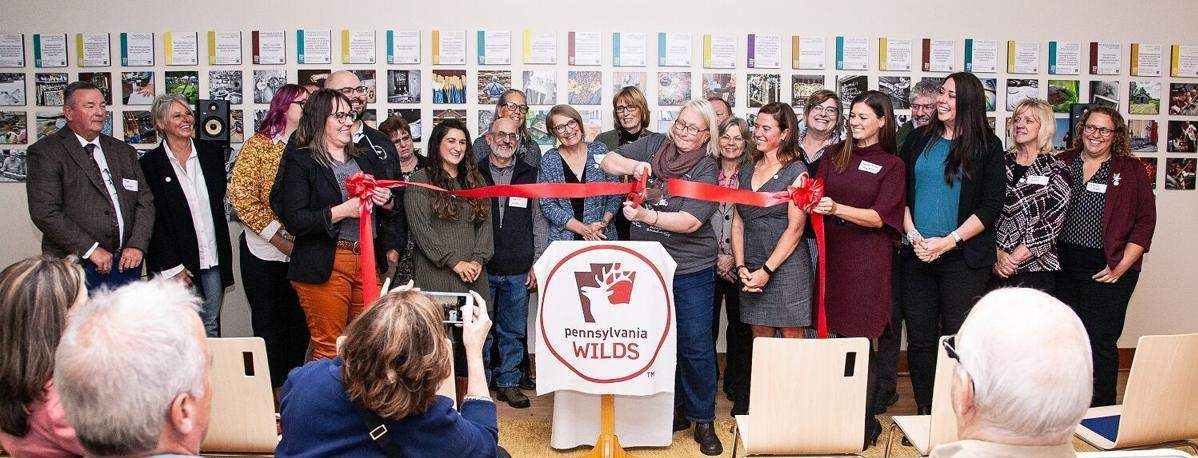
PA Wilds Media Lab, Kane, PA
The PA Wilds Center for Entrepreneurship is a 501c3 with a mission to marry conservation and economic development by acting as a backbone organization to strengthen and inspire communities in the rural PA Wilds.
The Center operates an entrepreneurial ecosystem — 600-plus members strong — designed to incubate creativity and innovation and marshal resources and connections to help rural entrepreneurs involved in the region’s outdoor recreation sector succeed.
The Center is also the external lead nonprofit for the PA Wilds Conservation Landscape, working closely with the PA Department of Conservation and Natural Resources and PA's State Office of Outdoor Recreation.
The Center regularly provides partner organizations in the landscape with verbiage, data sets, and support letters to tie their recreation-related funding proposals to the regional strategy to help them resonate with funding agencies and state lawmakers.
This example showcases how states with offices of outdoor recreation can work closely with intermediaries to amplify each other's work and impacts.
In December 2025, Pennsylvania's Department of Conservation and Natural Resources signed a 35-year lease with the PA Wilds Center to run the gift shops at Kinzua Bridge and Leonard Harrison state parks. The shops sell products 90 percent sourced from small businesses in the rural PA Wilds. The Center's stores have made more than $3.4 million in sales, about half of which, according to DCNR, goes directly back to rural small businesses.
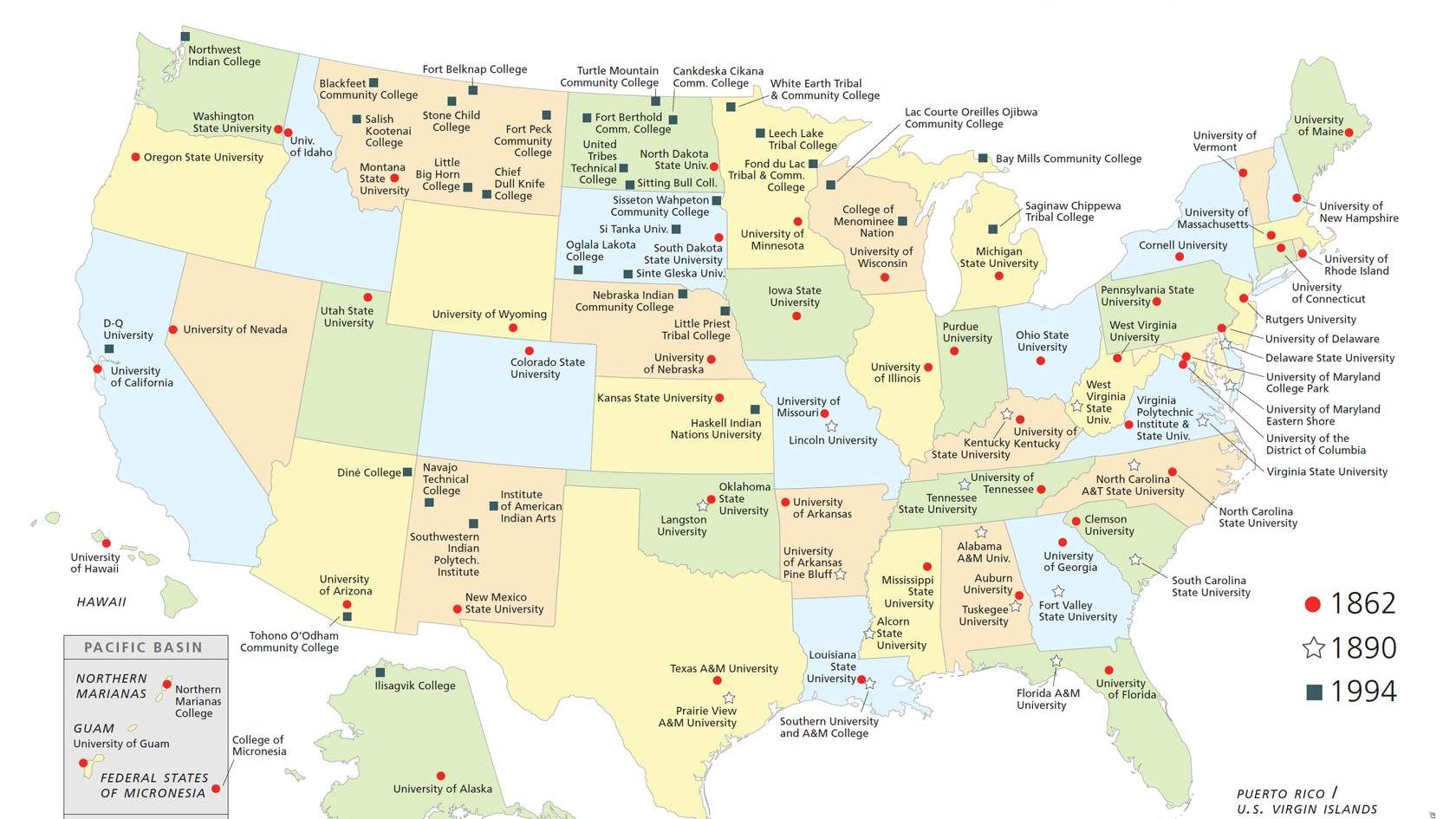
The United States has more than 100 land-grant colleges and universities that engage in extension services. These extension services "provide non-formal education and learning activities to people throughout the country — to farmers and other residents of rural communities as well as to people living in urban areas," according to the USDA's National Institute of Food and Agriculture.
Oregon State University, whose Center for the Outdoor Recreation Economy helped greatly in the creation of this Toolkit, has a strong extension service program.
Extension services can help by delivering research, education, and technical assistance to local stakeholders at a fraction of the cost of independent consultants, making small amounts of funding go further. For these reasons, extension was described in an interview as a "best-kept secret" for economic development. Examples of such partnerships are listed on Page 8 of this USDA resource.
In West Virginia, under the leadership of Extension Specialist Doug Arbogast, the Mon Forest Towns Partnership has utilized the West Virginia University Extension Service in a partnership with faculty and students from various departments and colleges at West Virginia University for branding and design, improved signage, GIS asset mapping, playgrounds and park design, and other partnership facilitation.