In this section:
- Examples of recreation infrastructure
- Definition of outdoor recreation economy
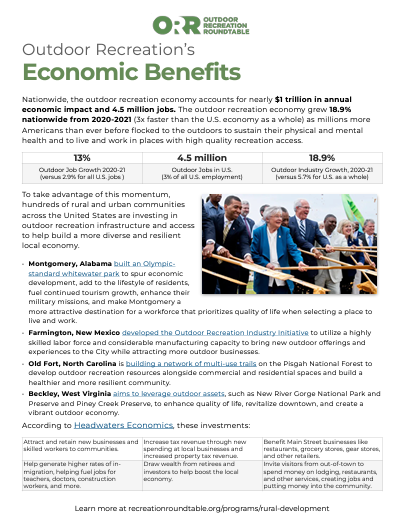
- Outdoor Recreation economic impact stats
In the face of such challenges, the activation and maintenance of outdoor recreation infrastructure within or adjacent to a community is now considered a strategy for rural America to achieve economic diversification and resilience.

Our natural assets are the foundation of a thriving outdoor economy. In recent years, many outdoor activities have experienced significant increases in popularity, fueling business expansion and job creation in rural communities, as well as healthier lifestyles.
Improvements to this infrastructure:
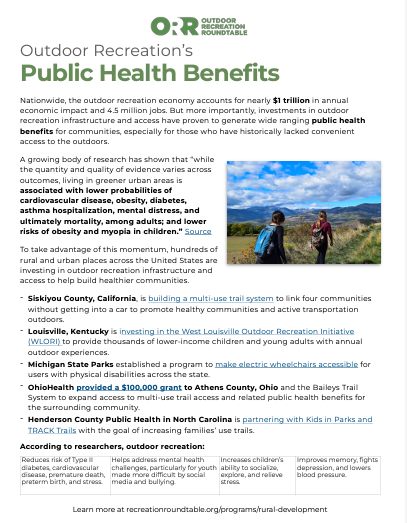
- increase quality of life
- benefit physical and mental health
- connect communities to the environment and each other
- attract new visitors and economic activity in the community
- create new outdoor jobs and businesses to connect people to this infrastructure
- and bolster other sectors by helping with recruitment and retention of outdoor-oriented professionals.
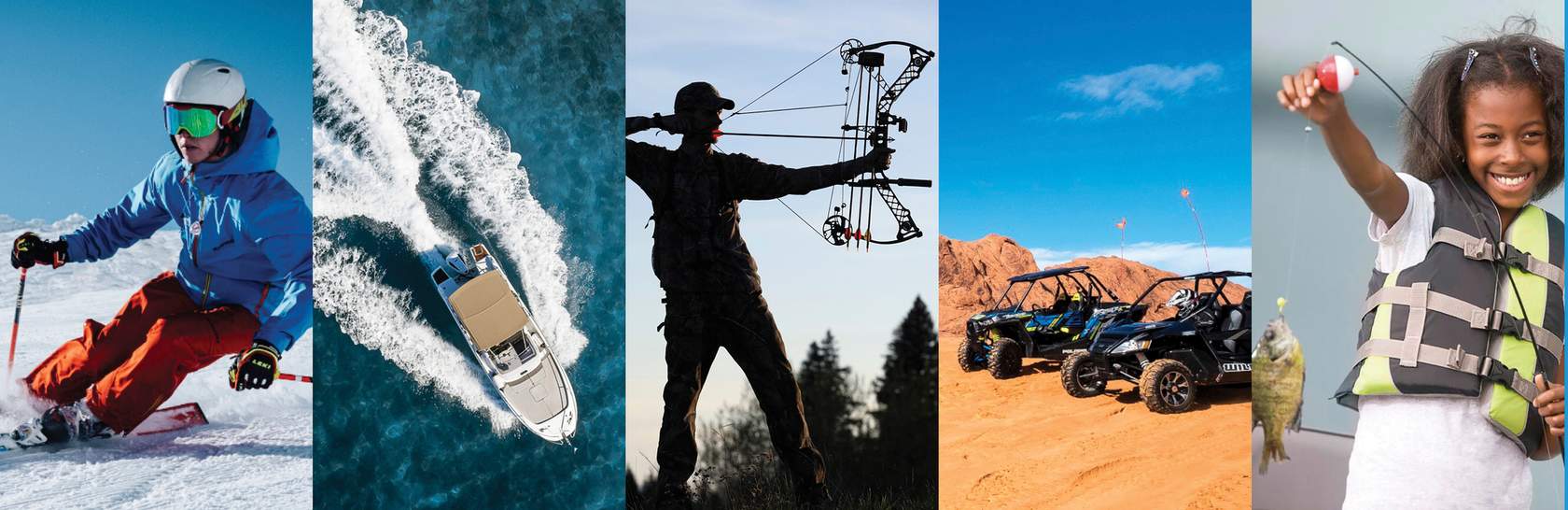
What does outdoor recreation infrastructure look like in these communities? It could be:

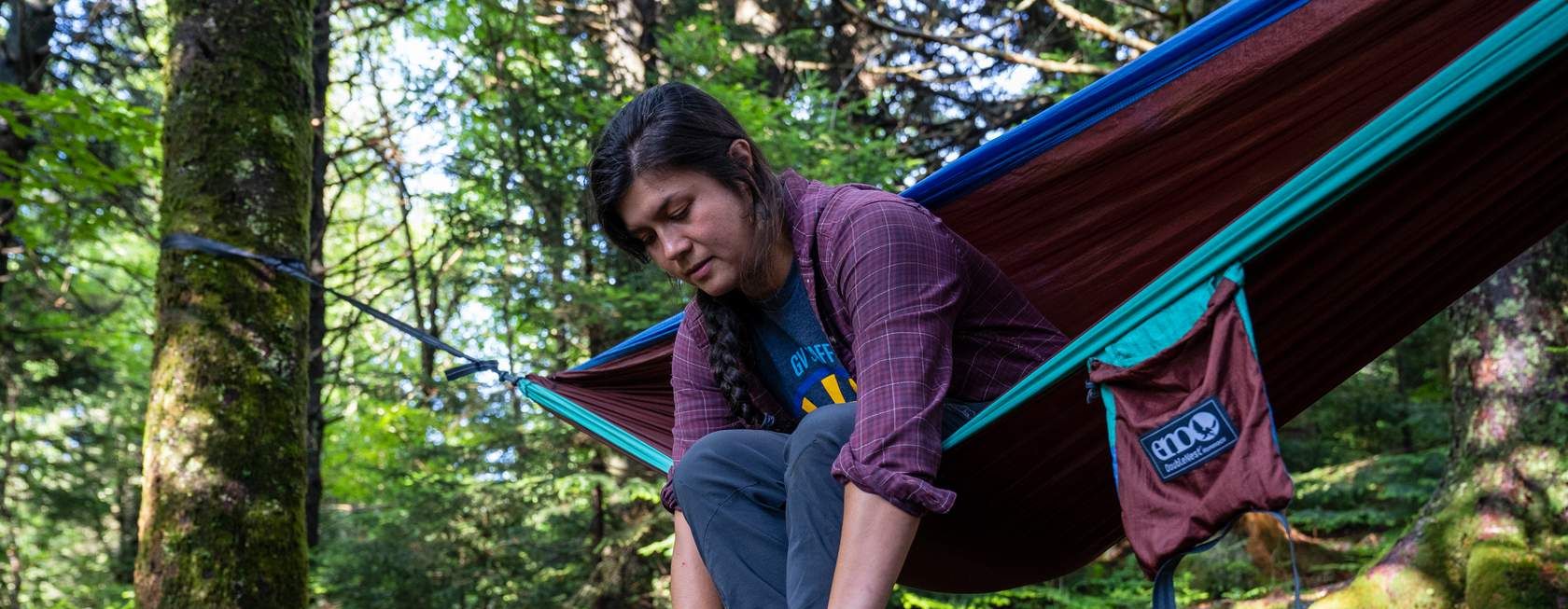
The majority of outdoor recreation takes place on public lands and waters, but private lands and waters provide important access to outdoor recreation as well — as evidenced by leading platforms like Hipcamp, which enables private landowners to offer camping and RV opportunities.
At a broader scale, outdoor recreation is a major force in the American economy. Each year, the U.S. Bureau of Economic Analysis calculates the economic impact of outdoor recreation on the national and state economies.
$1.3 Trillion
Nominal Gross Output from Outdoor Recreation, 2024
43.3%
Outdoor Recreation Growth in Real GDP, 2012–2024
5.2 Million
Jobs from Outdoor Recreation, 2024
From 2021-2022 the outdoor recreation economy grew 2.5 times faster than the U.S. economy as a whole. In 2018, over 318 million national park visits led to $20.2 billion in direct spending at hotels, restaurants, outfitters, and other amenities in nearby gateway communities, supporting over 329,000 jobs and generating over $40.1 billion in total economic output.
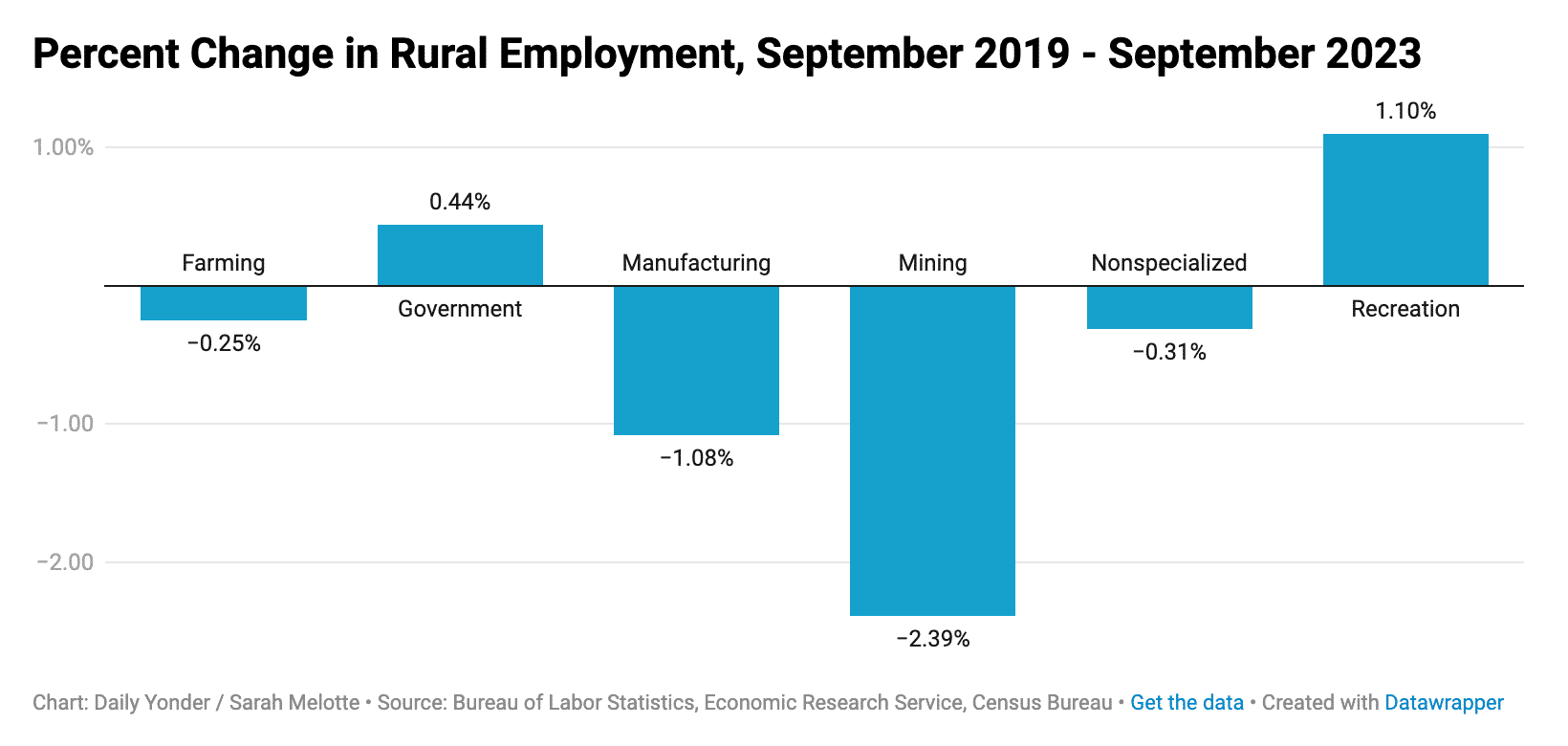
Recent data from the Bureau of Labor Statistics highlighted by the Daily Yonder show that "rural counties where the recreation industry is a big part of the local economy are more likely than other types of rural counties to have regained the jobs they lost during the pandemic."
Outdoor recreation on federal public lands and waters isn't just a pastime — it's a major economic engine. According to ORR's Balance Sheet report, access to outdoor recreation on America's public lands and waters contributes $351 million to the economy every day.
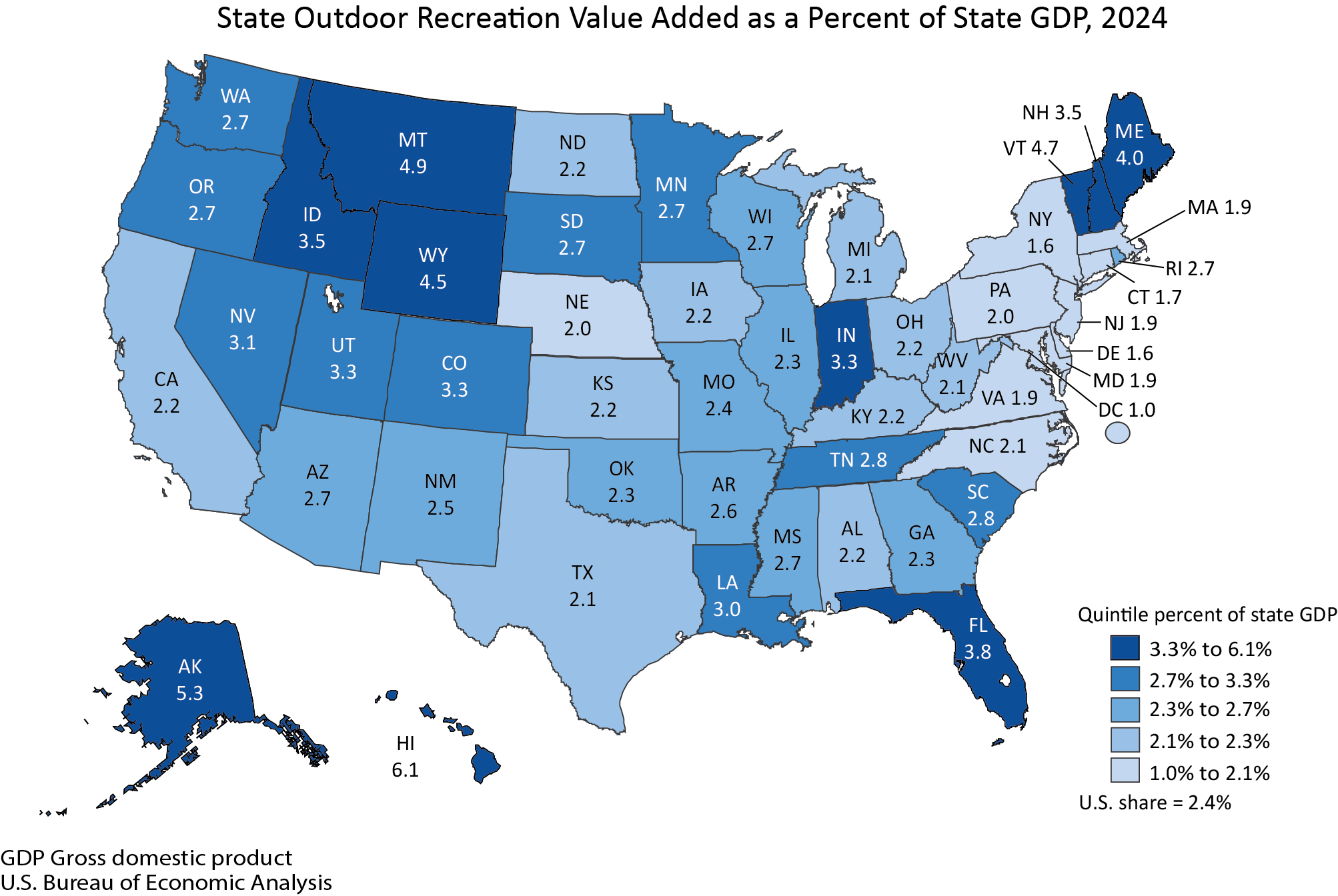
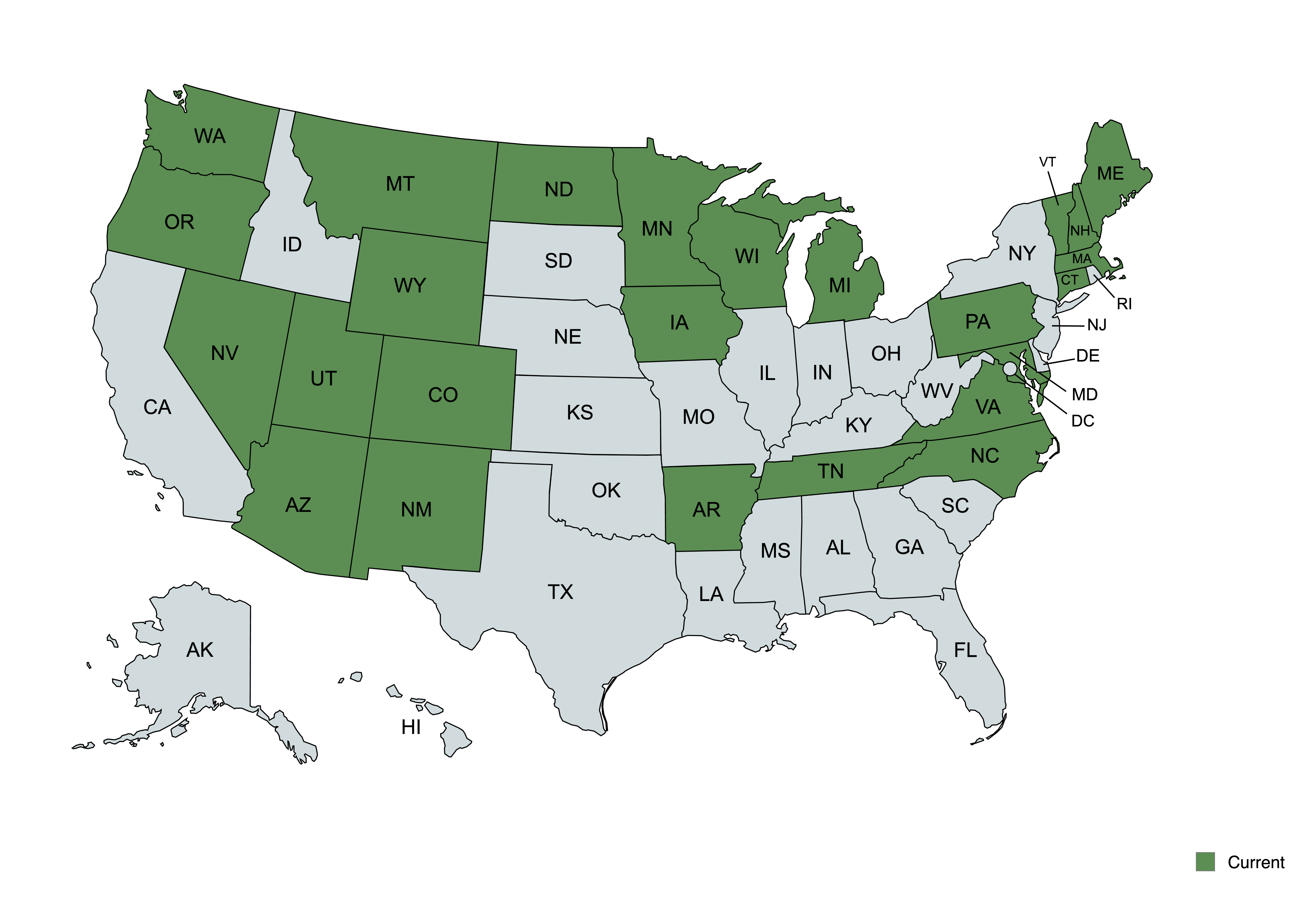
Each year, the Bureau of Economic Analysis also releases detailed reports on each state's outdoor recreation economy. Take a look at the most recent reports from BEA on each state's outdoor recreation economy.
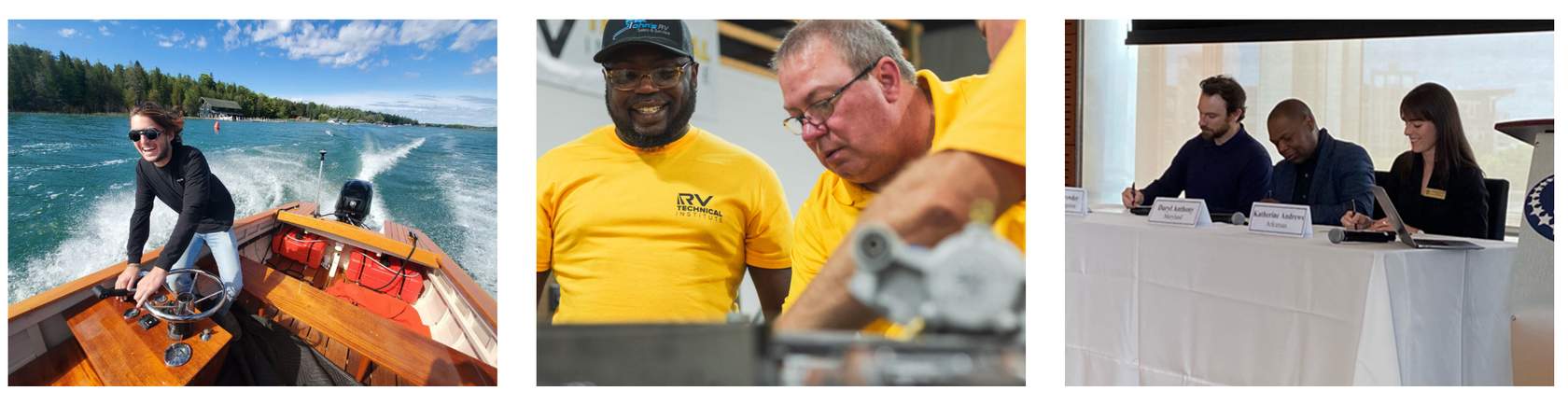
The outdoor recreation workforce is comprised of 5.2 million skilled professionals nationwide who connect people to high-quality outdoor experiences, according to the most recent data from the U.S. Bureau of Economic Analysis.
The definition of an outdoor industry job is simple: A job that helps people experience the outdoors.
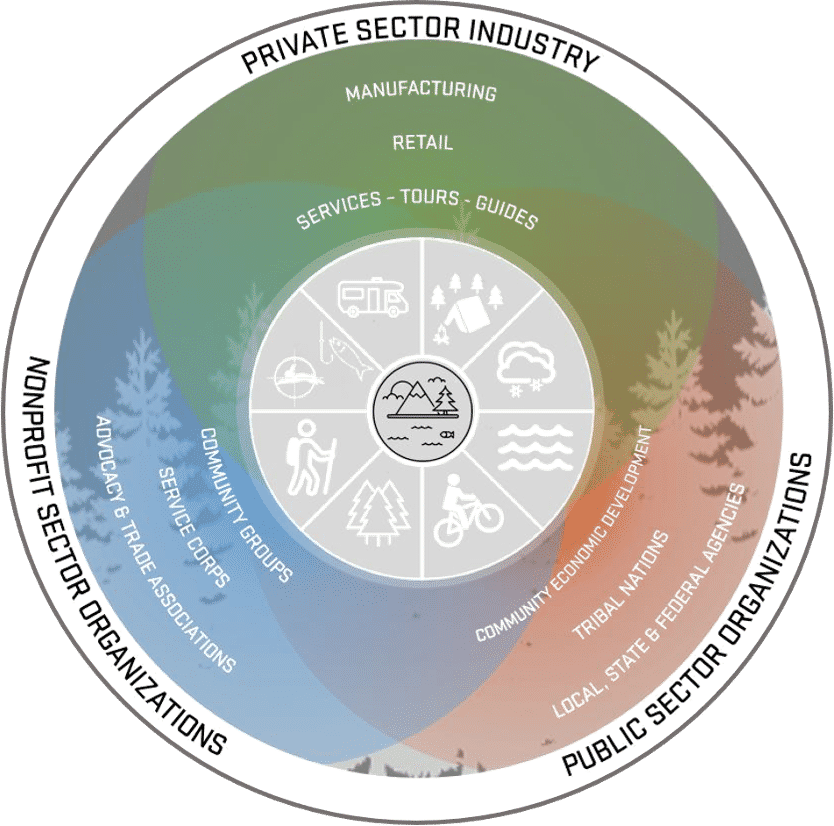
In practice, this can take many different forms, including jobs in the trades, manufacturing, infrastructure design, entrepreneurship, retail, public policy, technology and so many more. As a result, outdoor industry jobs take place both outdoors and indoors, with millions of talented professionals working in unison to connect people to the natural world.
See below for a breakdown of the wide variety of outdoor recreation careers.
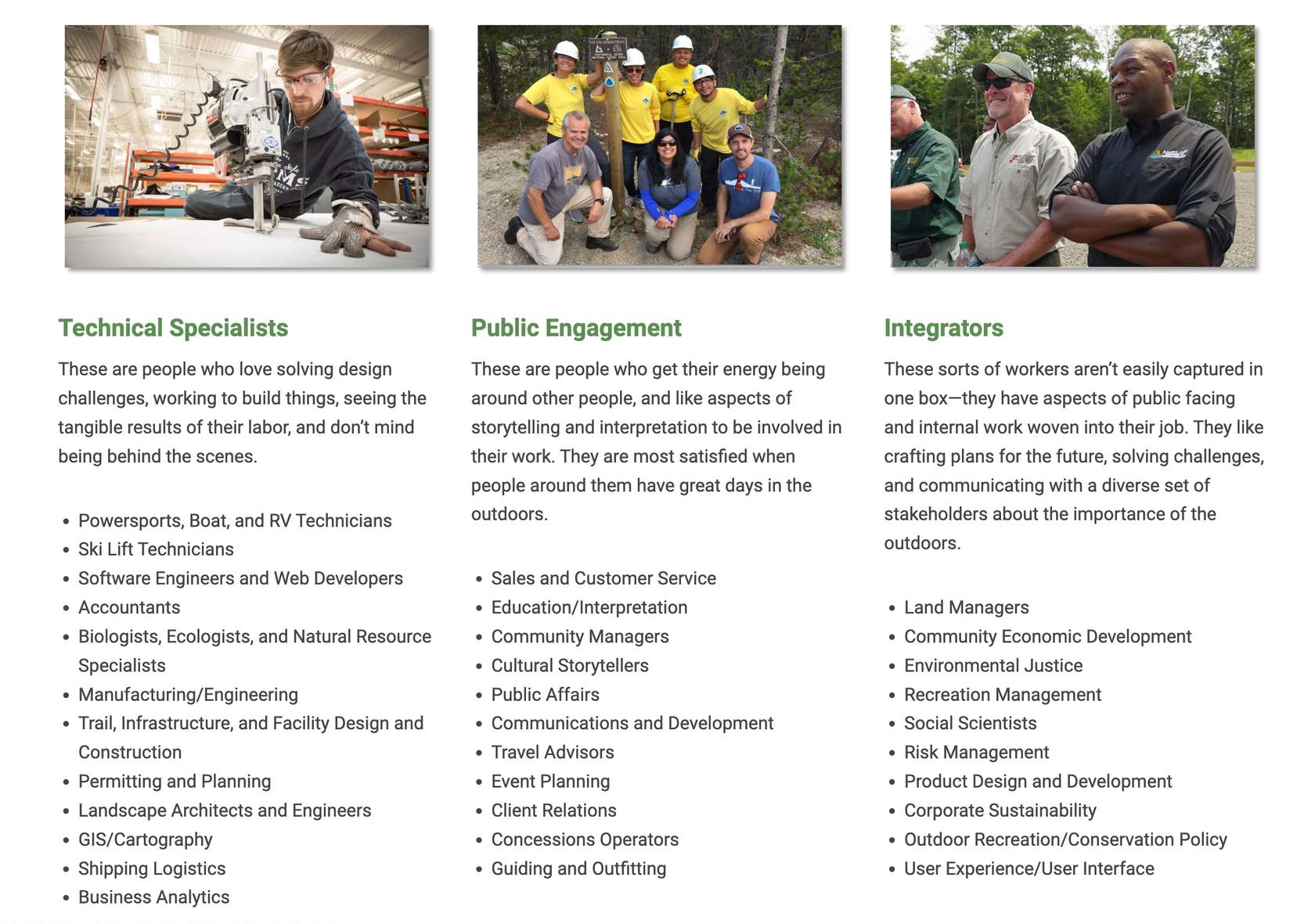
For a full rundown of the 5.2 million jobs in the outdoor recreation economy and the different types of careers supported by a local outdoor recreation economy, check out ORR’s Outdoor Workforce Hub, published in 2023.
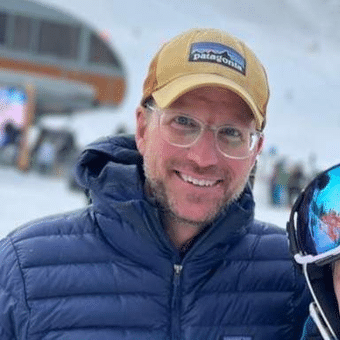
I’ve never seen a business walk down the street, only people. So if we want businesses to return to and grow in our rural communities we need to develop them in ways that first give people reasons to live there. Simply put, our great outdoors empower our communities – helping to turn visitors into residents, who in turn become investors in and advocates for the places we love.
As the outdoor recreation economy grows, so does the need to invest in the workforce that powers it. ORR's National Outdoor Recreation Workforce Consortium has published policy recommendations — covering coordinated workforce definitions, funding and incentives, regional workforce partnerships, and career pathways — to help strengthen the outdoor recreation workforce nationwide.