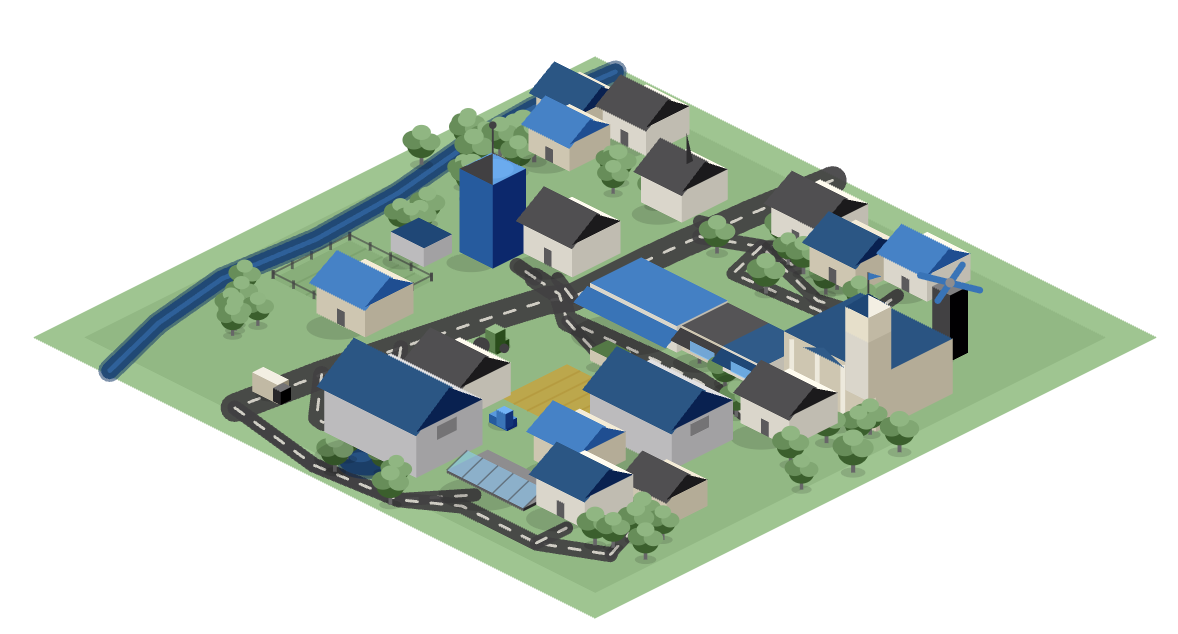
Before we get too far into this toolkit, it is worth a breakdown of the major players in economic development to understand who will be an important player in a community's efforts.
This graphic aims to simplify the ecosystem of economic development and the key partners who make an outdoor recreation economic development plan come to life.
Deconstructing Economic Development
Outdoor Recreation Roundtable Rural Economic Development Toolkit
Deconstructing Economic Development
- Town, City, County Planning and Building Staff
-
These experts understand who does what for a community, how, and with what directions. Located in City Hall or County offices, these staff issue permits, oversee local business or lodging taxes, zoning, building permits, and land use. Counties typically house health and safety inspectors.
Special Advice
To build a pragmatic vision, community leaders need to understand what is possible within given systems, and if not possible, what would need to change to allow new outcomes. These staffers are the best place to start and will often help identify new questions, solutions, and connections that hadn't previously been considered.
- State and Federal Agencies
-
States are full of many offices related to a community's success, from economic and business development to conservation and public health. 20 states also have offices of outdoor recreation to promote their states' outdoor recreation objectives. Small Business Development Centers and Small Business Administration offices also provide a vast array of business support services. Federal agencies generally refer to the land and water management agencies who steward recreation opportunities for a community and will have deep insights about usage habits, grant opportunities, and future considerations for success.
Special Advice
If you see initiatives in nearby communities that seem to be functioning well, or successful businesses, or high-quality infrastructure, ask the people behind them "what support did you receive from the state?" These conversations will open new ideas and opportunities to support a local economic development plan. Many states and regions also have overarching economic development plans that a community can slot into.
Federal employees are often asked to do a lot with limited resources. If you can show up with a real buy-in to their work and think of ways to maximize their bandwidth (e.g. volunteer teams for trail maintenance or a local coalition for recreation planning), they are likely to show up for you in return.
- Business Associations: Chamber of Commerce, etc.
-
These organizations are dedicated to serving the interests of the business community. They are often membership driven and provide services such as lobbying for business-friendly policies or acting as the voice of business in the local community.
Special Advice
Chambers of Commerce are a great place to meet leaders in the business community, understand their motivations, priorities, and challenges, and build allies for the long haul. Because business development and talent recruitment and retention are important outcomes of outdoor recreation economy development, you will want to know what existing businesses are already dealing with to set future businesses up for success, especially when it comes to housing and workforce stability. Many organizations like Chambers of Commerce host regular events with networking opportunities, even if you're not a business owner.
- Community Members
-
Community members play a role in informing policy through participation, town halls, testimony, community advisory boards, and grass roots outreach.
Special Advice
Community members are the engine that will drive your success (or inhibit it), depending on the level of trust they have in your vision. As Lucas St. Clair, who led the effort to establish Maine's Katahdin Woods and Waters National Monument described, "I had as many cups of coffee with people who would talk with me as possible" in making the case for the vision. It is much easier to advocate for (and harder to advocate against) someone you know on a personal level.
Elected officials and other community leaders have a much easier time "getting to yes" when they know that a decision will not be met by public outcry. For that reason, it is helpful to identify any potential detractors from within the community and proactively make outreach to understand their values and needs and incorporate into an outdoor recreation plan.
- Town Councilors and County Commissioners
-
These local policymakers receive input from community members, help design new policies, and approve strategic directions for a community.
Special Advice
While sitting in a several-hour meeting is not typically one's definition of a good time, public meetings are often where the rubber meets the road in terms of building public support, addressing zoning revisions, identifying grant opportunities, interfacing with local managers, and many more.
Like anyone, elected officials' belief systems are swayed by a combination of compelling data, powerful anecdotes, and personal relationships. Ensure that you aren't seeing your electeds only in public meetings, but also at coffee shops, local events, and in the field where the potential for the work is more obvious.
As one interviewee noted, coalition building is key to sway electeds: "You want to build a diverse coalition of stakeholders that makes it almost impossible for your local elected officials to say no.”
- Education Providers
-
Towns, regions, and states include diverse groups of community colleges, colleges, universities, and other trade and technical programs. Many of these programs (including those on this map) are well-positioned to provide talent for a community's outdoor workforce.
Special Advice
Loop these programs and their leaders into your plans early to understand the wide confines, organizations, and outputs of the outdoor recreation economy and understand how to best position their students for available jobs. Research their resources and programs to understand if there may be opportunities to provide workforce training, research, or special programs to your community.
- Outdoor Recreation Users & Tourists
-
Outdoor recreation users within your area or visitors from outside can be a boon to economic development. They should be seen as agents for stewardship with thoughtful education and outreach.
Special Advice
Be aware of the economic flow of potential visitors. Will they have access to businesses related to their activities? For example, if they are campers is there a local camping supply store or small grocer that they can be encouraged to visit? Even a small concession stand nearby can be tremendous for a small local business.
Additionally, consider the channels through which your visitors receive information and what is most important for them to know. How will they know how to align their recreation plans with their desired goals/abilities? How will they know how to recreate with reverence for the place and leave it in good condition?
- Economic Developers
-
These professionals help design and implement economic development strategies and interface between public and private partners. Their work may include helping existing businesses to grow, assisting entrepreneurs with their start-ups, or attracting new businesses. Ultimately, economic developers seek to create prosperity for the communities they serve.
Special Advice
Economic development offices are sometimes housed at the city, or county level; they may also be a separate non-profit that serves the community.
Ask economic developers what data/metrics, comparable stories, and other information they need to support your vision.
They are often well connected to local business leaders as well as partners on the public-sector side, and should be able to provide advice around financing, permitting, and making the right connections.
- Local Non-Profits
-
These organizations, which may focus on topics including downtown vitality, housing, conservation, healthcare, arts and culture, and other important social services, have extensive expertise in topics that intersect closely with a community’s economic development plan.
Special Advice
Consider whether a local non-profit could provide consistent event space and technical assistance to support outdoor coalition convenings—interviewees cited this as a critical aspect for community success.
Additionally, many non-profits rely on volunteers to do their important work. These volunteers may be interested in supporting outdoor recreation efforts as well, from trail-building, event production, and education. Consider how partnerships with non-profits can raise visibility for their work while increasing awareness of your work to their volunteers.
- Local Businesses
-
These organizations both benefit from a community’s economic development strategy and are important actors in it. Small businesses are the backbone of the US Economy.
Don’t forget manufacturers, an important part of any local economy as their traded-sector goods help to create local wealth and bring outside money into a community.
Special Advice
Understand what your business owners are thinking about most when they’re not behind the register. Do they frequently have trouble housing employees? Are they dealing with uninformed visitors? Are there onerous processes to operate that could potentially be streamlined? What businesses hold the most sway in your community and how might they play a positive role in your plan?