In this section:
- Ideal participants
- Examples of collaboratives
- Finding mutual benefit
- Public-public partnerships
- Advice for working with agencies
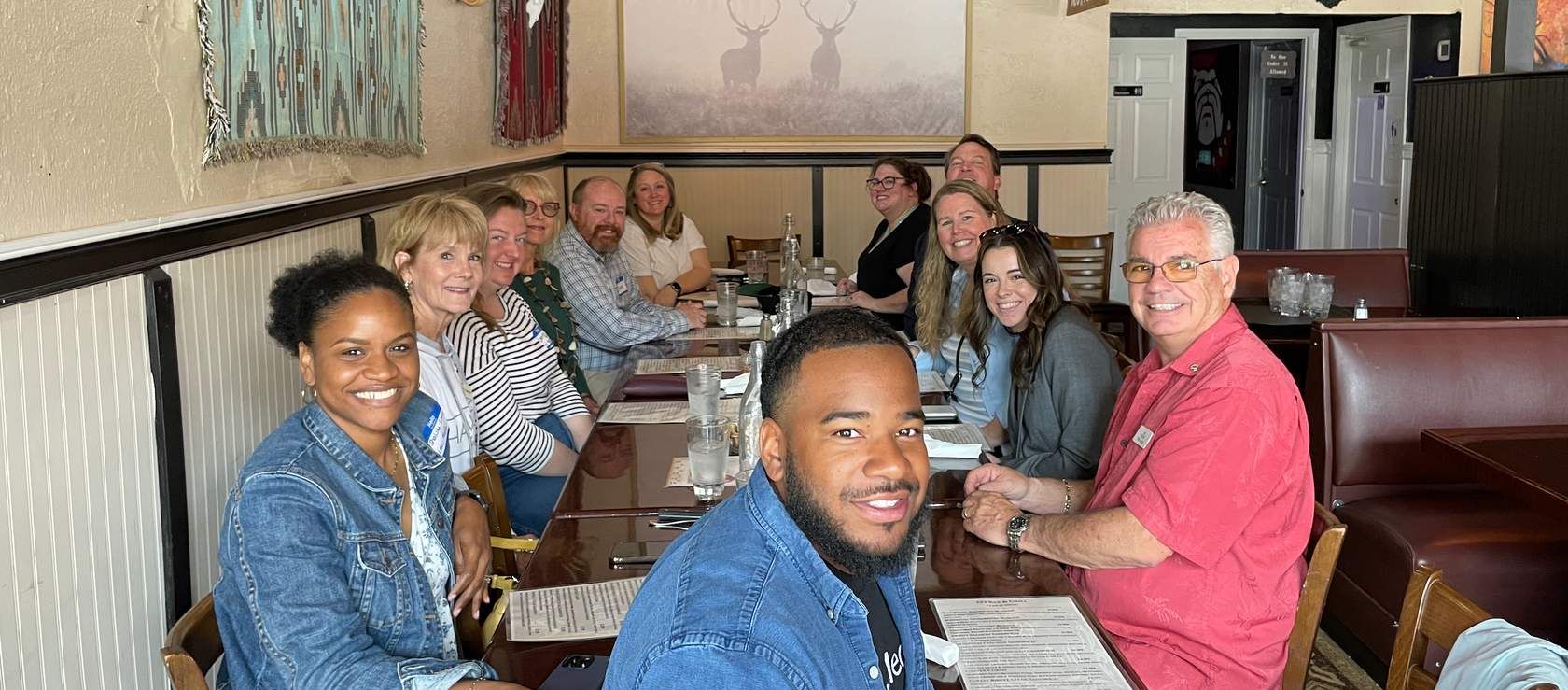
After a community identifies its local champions, they should build representative stakeholder groups that unite diverse public and private interests from the community around the same table.
It's important to mobilize a steering committee that is cross-sector, committed, and dedicated, involving representatives from the city or town, private business owners, community foundations, nonprofits, state agency (if applicable), federal agency (if applicable), and other stakeholders as part of the group. That, and just having people in the community – what I call the community sparkplugs – who have the dedication and "oomph" to keep things moving. That's what holds it together.
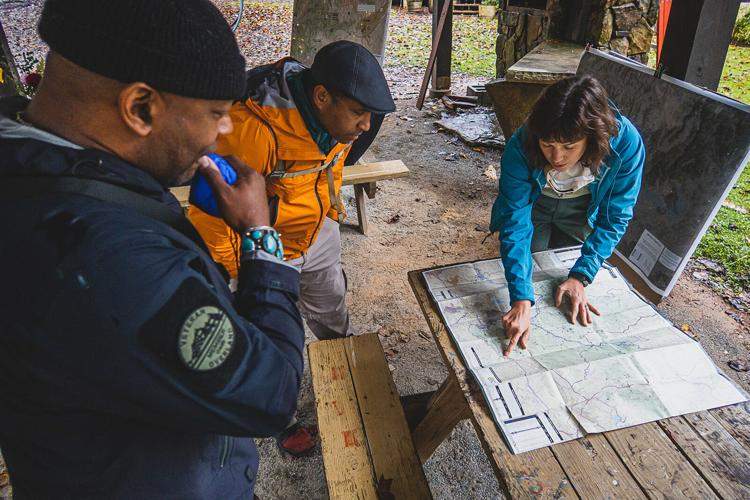
Best practices suggest that these groups initially should be small, focused, and reliable, and only expand as momentum and interest grows behind the vision. According to interviewees, these stakeholder groups may include some combination of:
- Public Sector
- Town Councilors
- County Commissioners
- Departments of Community and Economic Development (DCED)*
Planning and Development Departments* - Education providers
- Destination Marketing Organizations (DMOs)/Tourism groups*
- Non-Profit
- Local land trusts
- Conservation non-profits*
- Conservation or stewardship corps
- Historical Commissions/Museums*
- Private Sector
- Outdoor recreation advocacy groups and trip-leading organizations*
- Private landowners
- Outdoor businesses
- Water Utilities
- Private businesses (e.g. restaurants, breweries, artists, hotels/lodging, farming/ag, engineering, realty, gear and other manufacturing, construction)
- Chambers of Commerce
- Healthcare providers
- Entrepreneurship groups/Business incubators*
- Philanthropies and foundations*
*May also be state/national in scope
- State Land Management Agencies (State Parks)
- State Departments of Conservation and Natural Resources (DCNR)
- State University Cooperative Extension
- Community Colleges
- Governor's office
- State Offices of Outdoor Recreation
- Bureau of Indian Affairs (BIA)
- Tribal governments
- Federal Land Management and Resource Agencies
- Federal Funding and Assistance Agencies
ORR's Trail Map for Rural Development in America recommends building "Outdoor Recreation Plus" coalitions: bringing rural health providers, public land managers, school districts, farmers and ranchers, and other leading local employers to the table from the start, so that recreation assets serve shared community goals.

When we bring folks together in the room we never start with, “What’s the problem?” and “What needs to change?” which often lead to finger pointing at people not being in the room. Instead we ask, “What do we want to contribute?”, which opens a new perspective of creating shared wealth.
We also give people a variety of opportunities to be in the room—do they have a network to offer? Do they just want to listen in? Do you want to be an engaged contributor? Not everyone has to engage in exactly the same way.
Different Formats
These stakeholder groups may take a number of different forms, from outdoor recreation coalition/collaborative (where outdoor recreation may present a new opportunity for economic development) to outdoor business alliance (in places where outdoor recreation businesses are already established) to outdoor recreation and conservation partnership (where stakeholders may appreciate recreation and want to ensure its sustainable balance with natural resources).
Tribes have formed inter-tribal coalitions for the purpose of managing conservation, recreation, and tourism outcomes and objectives, including the Bears Ears Inter-Tribal Coalition and Montana Indigenous Tourism Alliance. Additionally, some focus on the town or city level, while others combine regional interests by uniting across jurisdictions. There may be multiple stakeholder groups formed in the same region to support different desired outcomes.
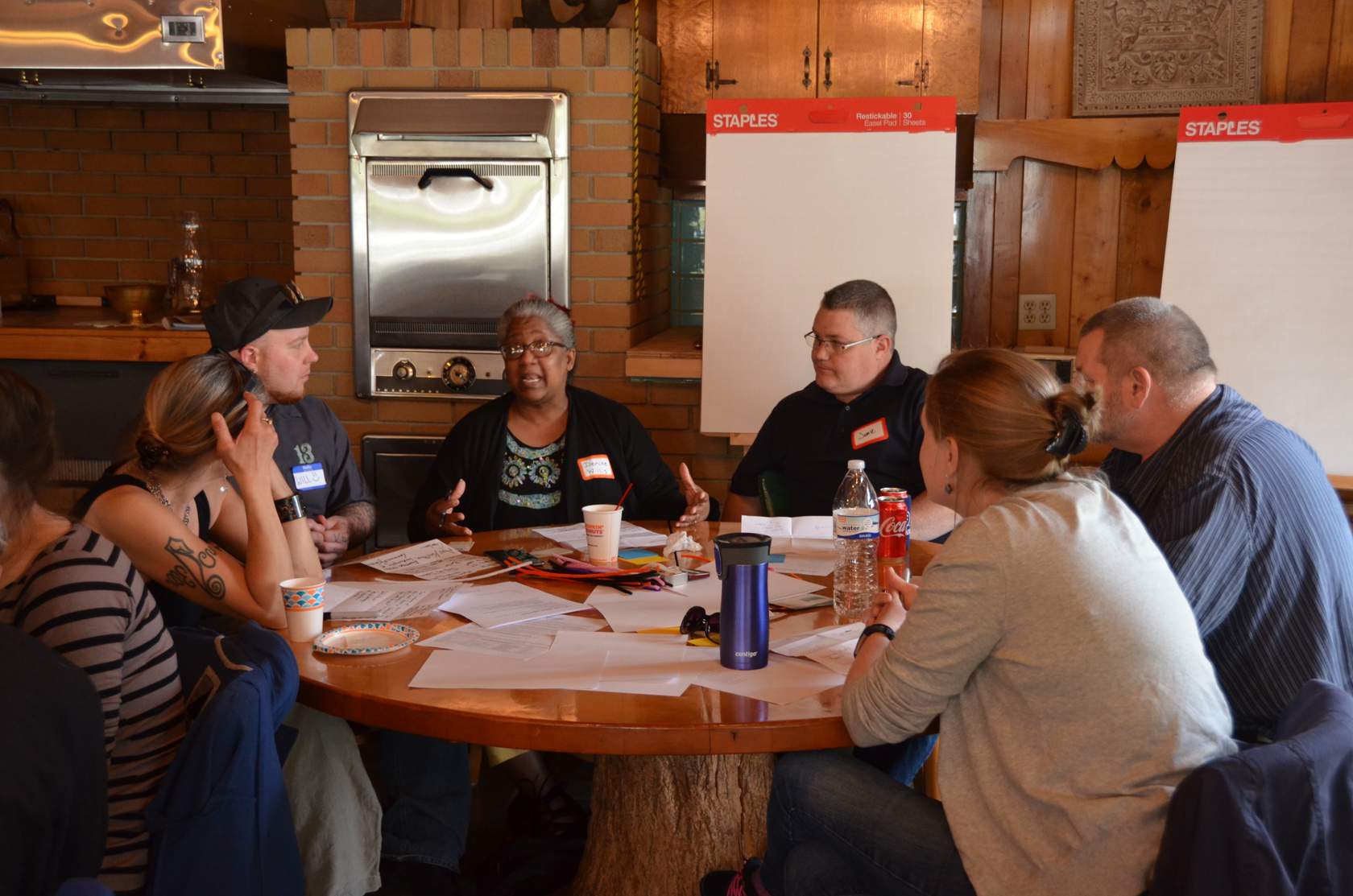
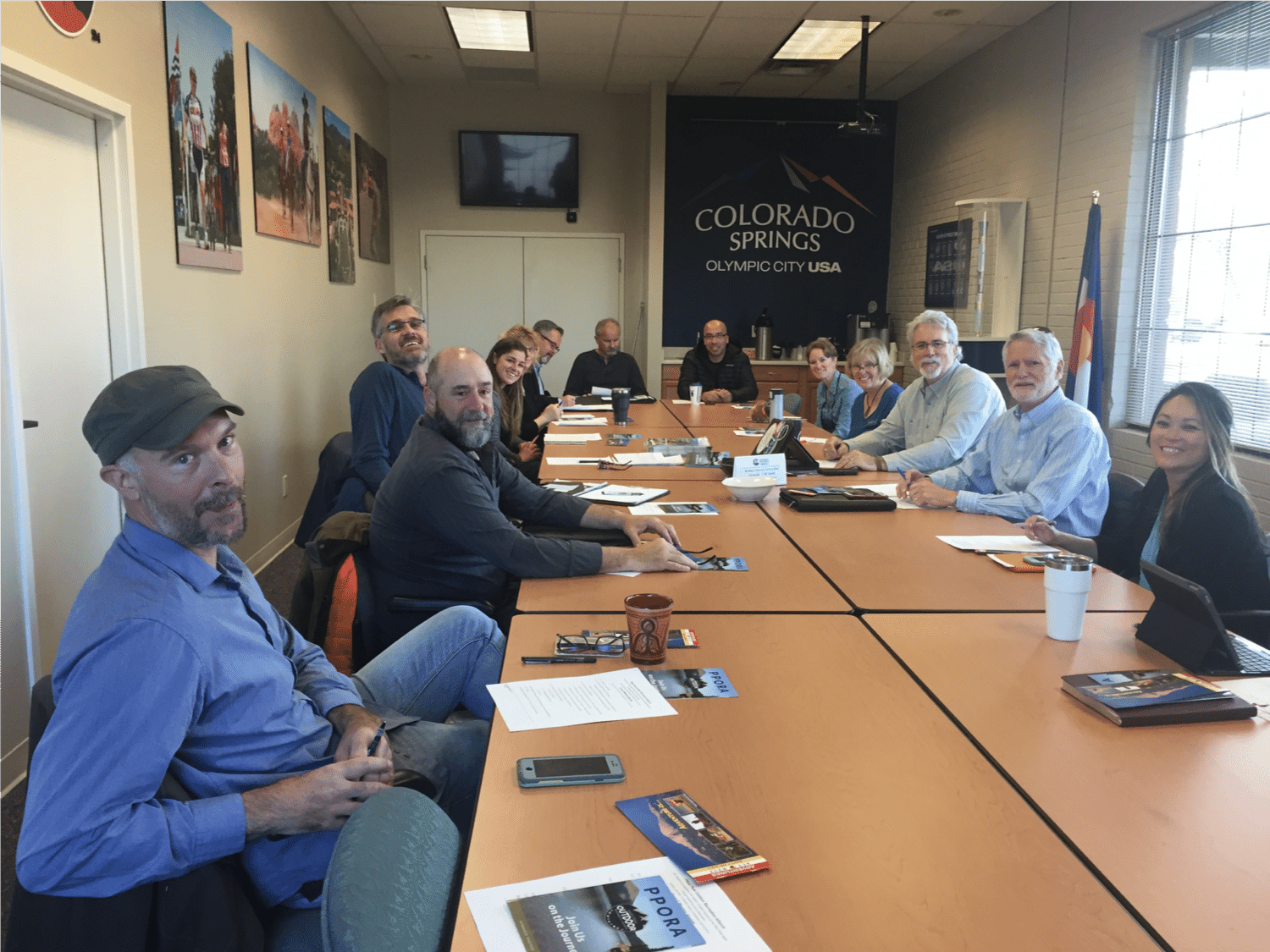
Video featuring the Pike's Peak Outdoor Recreation Alliance
The Vermont Urban and Community Forestry Program Town Forest Recreation Planning Toolkit provides a step-by-step process of how communities utilize collaboratives to build a long-term plan.
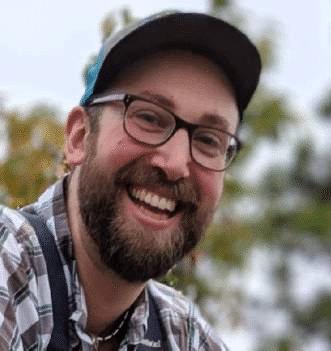
Mutual benefits breed strong coalitions. Ensure each community member or organization involved actually agrees that your proposal will help them or their constituents. When elected officials see broad backing and advocacy from all these parts of your community, it’s really hard for them to say no!
Broad Representation
By striving for broad representation, including political diversity, diversity of race/ethnicity, socioeconomic status, ability level, and representatives from local tribes, stakeholder groups can ensure that the right players are informed and ready to mobilize politically at the local and state levels, and proactively develop initiatives around conservation and stewardship, education and workforce development, economic development, and public health and wellness, and opportunity and experience, the five pillars championed by the Confluence of States. These collaboratives can set objectives and timelines for community development and establish conditions for external funding and partnerships.
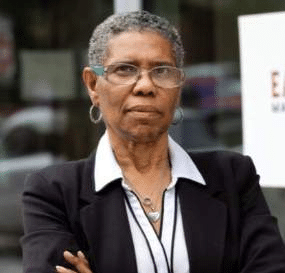
In our collaborative, we saw an intersectionality of opportunities coming together. People On the Move was interested in shifting the narrative on who was a leader in our community and who they resembled. The trails gave us the opportunity to swing the pendulum on leadership, and we united behind a predominantly African-American organization to seed the opportunity for community benefit.
See alsoStephanie Swepson-Twitty is also a mentor and adviser to Mountain BizWorks' Waypoint Accelerator for outdoor businesses. See Mountain BizWorks in Attract and Support Outdoor Businesses.
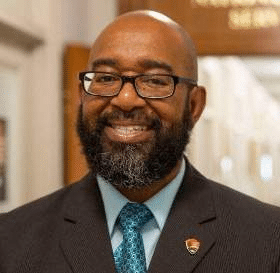
Sometimes low-to-moderate income communities fit squarely into banks' investment priorities. Let's not miss the opportunity to talk about a strategy for economic development in rural and urban contexts. There is a role there for banks or financial institutions to do gap financing.
Several interviewees noted the strength of partnerships between public agencies (whether state with state, state with federal, or federal with federal) to unlock the most out of limited resources at each agency and work across management boundaries.
"The importance of bringing federal partners to the table should not be understated. It's important to have the federal agency players together in the room. It allows them to share the resources they have on the spot as well as participate in the visioning process."
- Stephanie Bertaina, Senior Policy Analyst, U.S. Environmental Protection Agency Office of Community Revitalization
Although federal partners (like at the U.S. Forest Service, Department of the Interior, U.S. Army Corps and NOAA National Marine Sanctuaries) are generally limited in their ability to provide new funding to projects, they are well-versed in statutes, policies, authorities, and existing resources that may inhibit or support communities' economic development objectives.
The ability for the Forest Service to work on a project often ends at the borders of the Forest, but the impact goes beyond that. For a gateway community, recreation on the forest has a huge impact in town--at hotels, businesses, restaurants, guides/
outfitters, etc. At the end of the day, people who recreate on the forest might want to go back to the community for a beer, see a show, stay in a hotel, etc. Our eyes are open to more public-public and public-private partnerships.
In the case of the USFS, one participant suggested engaging directly with District Rangers and Forest Supervisors, who have more decision-making authority than Regional Offices. In doing so, connecting a community's plans to the USFS Framework for Sustainable Recreation and providing a trails coordinator and reliable crew that works to USFS standards can move the process forward more expediently.
Know what kind of tequila your land manager drinks. I’m mostly joking, but these are folks who are generally managing a ton of priorities at once. That level of commitment to personal respect and relationship-building can make a big difference in their willingness to come to the table and go to bat for your vision.
Omero Torres, Acting Deputy Forest Supervisor at El Yunque National Forest, shared this take home advice to recreation collaboratives when working with federal agencies:
Three pieces of advice for working with agencies: 1) Disclose what you want to achieve, and why.
Don't hide your cards with agency staff who are generally managing many things at once.
2) Put in sweat equity. I have seen recreation groups take on research and drafting work in our NEPA obligations, or showing up to contribute volunteer hours on trails to shoulder the load.
3) Make your proposal reasonable. We're not going to support cutting trails across the entire forest, but a well-informed and reasonable proposal for access will make it easier for us to get on board.
Interviewees mentioned the utility of USDA Rural Development (RD) in funding recreation economy development.
RD acts as a big loan bank, providing loans, grants and loan guarantees for rural communities, which allows them to extend their ability to work beyond the boundaries of the forest and into the communities. For instance, if a community needed to repair a ski lift on USFS land, USFS would be unable to fund the project, but RD has grants and other business opportunities to support partners.
Other Programs at RD
Rural Energy for America Program
Rural Energy for America Program
Provides guaranteed loan financing and grant funding to rural small businesses for renewable energy systems or to make energy efficiency improvements. Think about the cost savings for outdoor businesses at all scales!
Housing Solutions In Rural Recreation Communities
Housing Solutions In Rural Recreation Communities
A 2023 webinar featuring leaders from gateway communities and highlighting federal resources and private sector strategies that help communities leverage their outdoor recreation and tourism venues to address housing solutions and improve economic resilience.
Community Facilities Direct Loans and Grants and Loan Guarantees
Community Facilities Direct Loans and Grants and Loan Guarantees
These programs provide affordable funding to develop essential community facilities in rural areas and loan guarantees to eligible lenders to develop essential community facilities in rural areas. Both can be tapped for infrastructure support in communities seeking to develop high quality recreation infrastructure.
Single and Multifamily Housing Loans and Loan Guarantees
Single and Multifamily Housing Loans and Loan Guarantees
These programs provide solutions to housing supply and demand in rural communities, where housing availability and affordability can be difficult to guarantee.
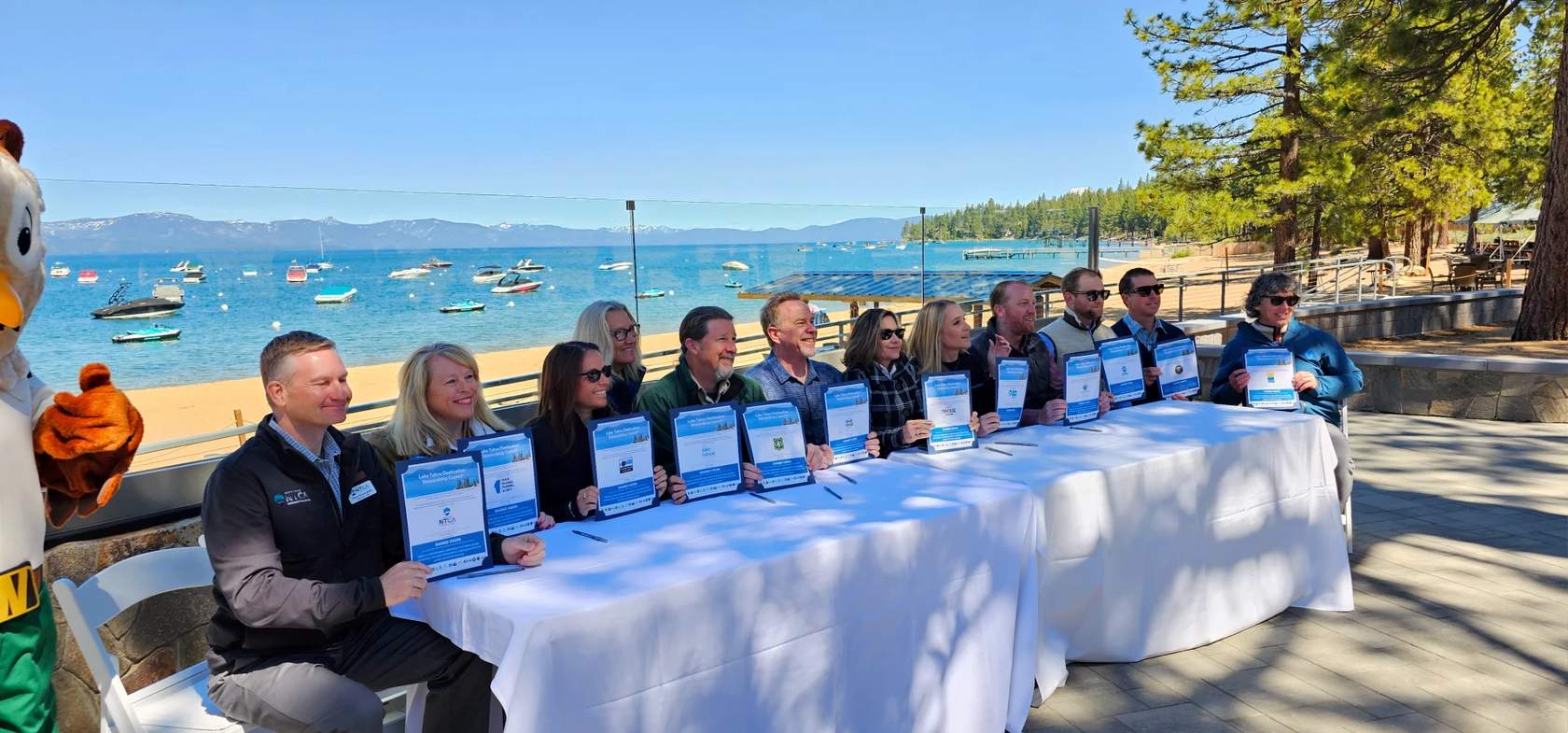
Finally, interviewees highlighted the effectiveness of state-level public-public partnerships as well:
In Vermont, we’ve been able to achieve some major accomplishments by strengthening key relationships at the state level between the Department of Forests, Parks and Recreation and the Agency of Commerce and Community Development and at the community level between municipalities, outdoor businesses and trail organizations.
By strengthening these connections we’ve helped align outdoor recreation partners around recreation guidance to keep the public safe during major emergency events, improve on climate adaptation and resilience, and invest millions of dollars into Vermont communities who are investing in outdoor recreation as a means of economic recovery and development.
The state of Nevada has created a signed, Shared Stewardship program between state and federal agencies such as USFS, BLM, NDOR, Nevada DOT, Division of Wildlife, and including closer California agencies. The objective is to create opportunities for divisions and agencies to work together on efforts in hopes to maximize time efficiency and assist local communities, land management efforts, conservation/
cleanup, current and future project collaborations, and the like. This way, not just one agency is doing all the work. It has also become evident that this helps in communication and outreach efforts to local and state governments to make projects more seamless.