In this section:
- Defining the message
- Building buy-in
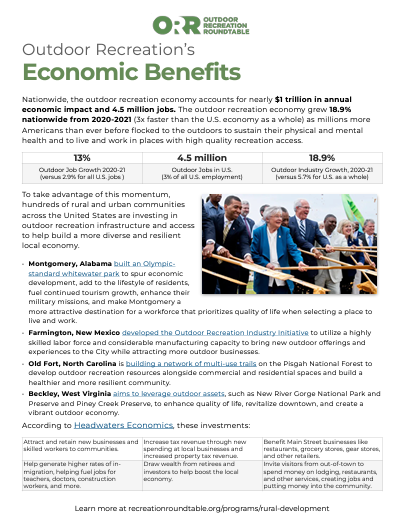
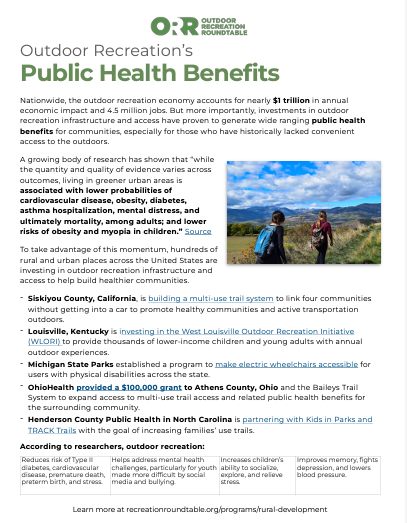
- Economic/public health benefits
To be most effective, champions for outdoor recreation need to sing from the same songbook on the benefits of outdoor recreation.

When you start talking about the outdoor recreation economy, there's all these lanes to it. It's service sector, it's manufacturing, it's nonprofits, it's public lands and waters. It's the marriage of conservation and economic development — two things that have historically been at odds.
The Drive-Home Message
The basic value proposition is this:
Investments in outdoor recreation infrastructure improve quality of life, a core driver for state and local economic competitiveness in talent recruitment and retention as well as visitor attraction.
Access to outdoor recreation improves mental and physical health outcomes along with associated cost savings and connects communities to one another and the natural world.
Messaging in Action
When I talk to leaders in these communities, I hope to help them realize that investing in outdoor recreation infrastructure is an asset-based investment—it’s a catalyst. It's not just building a trail, it’s getting a new sewer connection under the property and other utilities, new sidewalks, and 5000 square feet of commercial space to support the new users of the trails. We are creating an asset for the public sector to invest around.
I think it is imperative that we brand the outdoor industry as a bipartisan space focused on conservation, recreation, and a healthy lifestyle. More and more communities are realizing the combined benefits of quality of life, economic development, and a sustainable culture through outdoor recreation planning and infrastructure. These are all important, credible selling points for economic vitality and stewardship that create the ultimate synergy in a thriving society.

Gone are the days where quality of life amenities in communities were a “nice to have”. Today, businesses and workers looking to relocate list access to outdoor recreation at the top of their list when making location decisions. Access to the outdoors is critical to economic vitality.

At every level of government, we seem to face the constant pressure of funding core services and functions — be they social services and Social Security, public health expenditures, education, public safety, national defense, etc. The consequences of climate change are hitting our communities.
But what about nature and nature access? The pandemic showed that we need a healthy natural environment, and access to it, for our individual wellbeing. It’s time to seize the moment and make clear our shared understanding that nature access is a societal must-have, not a nice-to-have — for the benefit of the planet, our local places and our people.
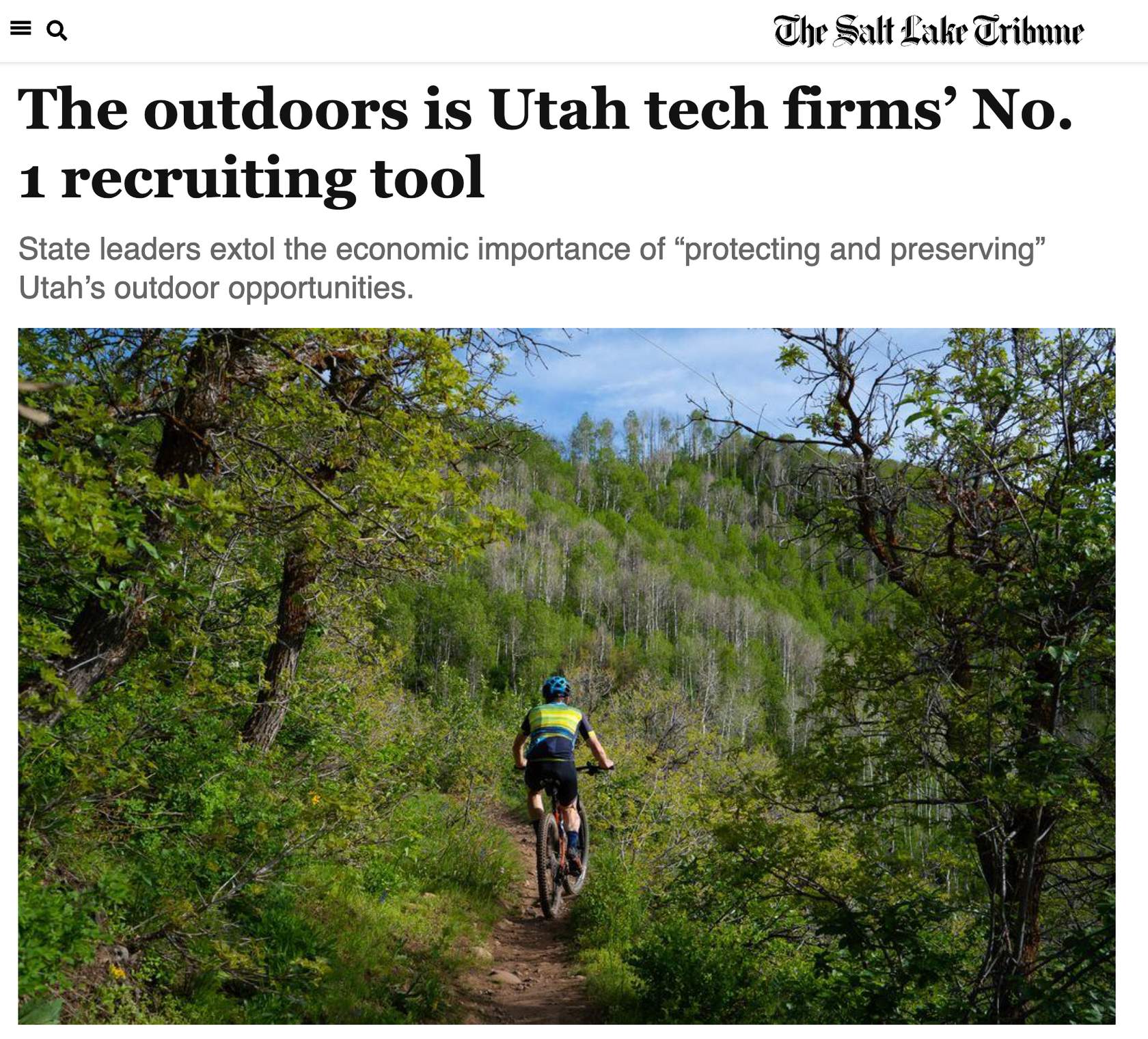
In short, the outdoor recreation community should build the case that outdoor recreation is not a "nice to have," but rather, a "must-have." With the framing above, they can dispel notions that outdoor recreation strictly benefits tourists, which can be a red flag for rural communities.
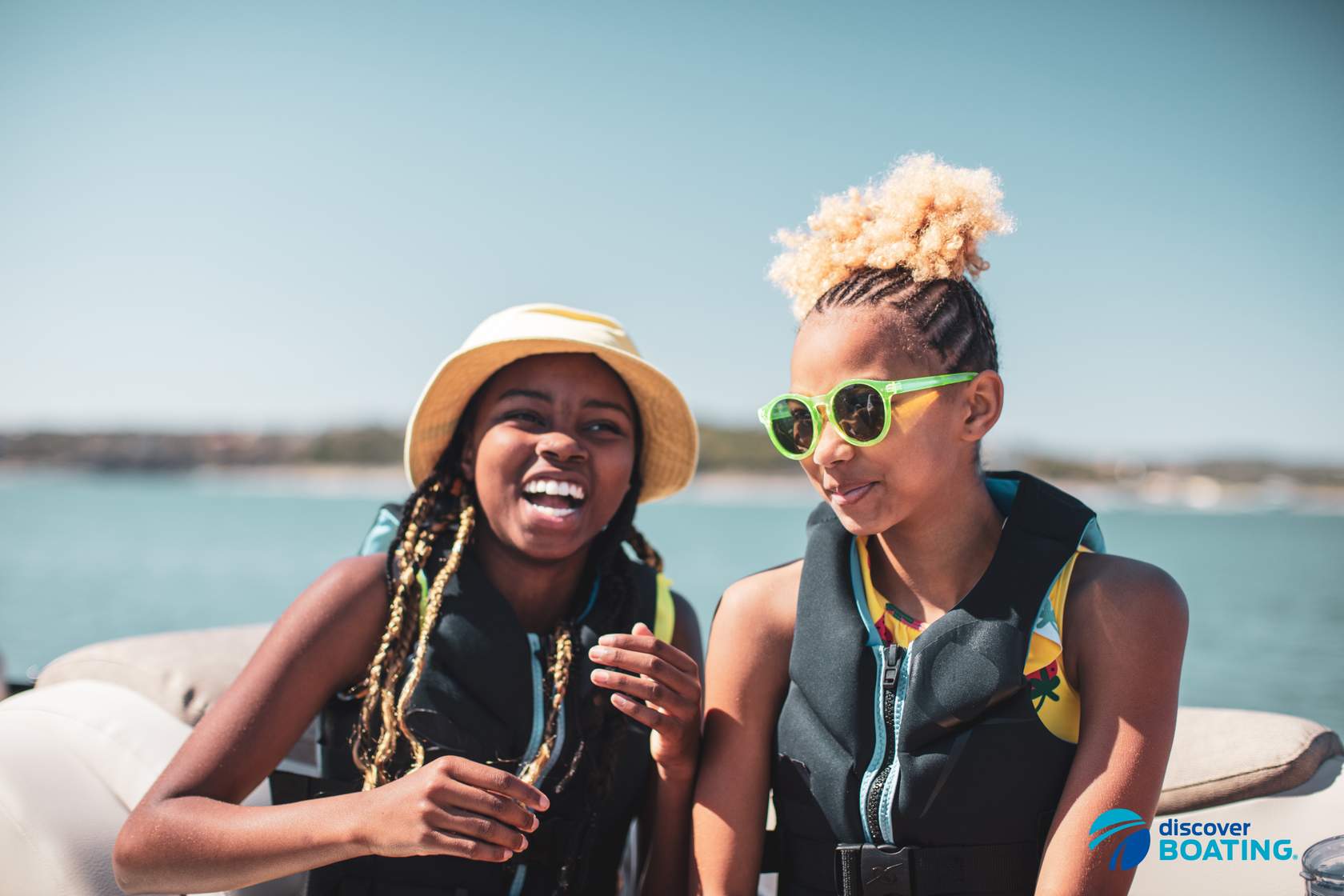
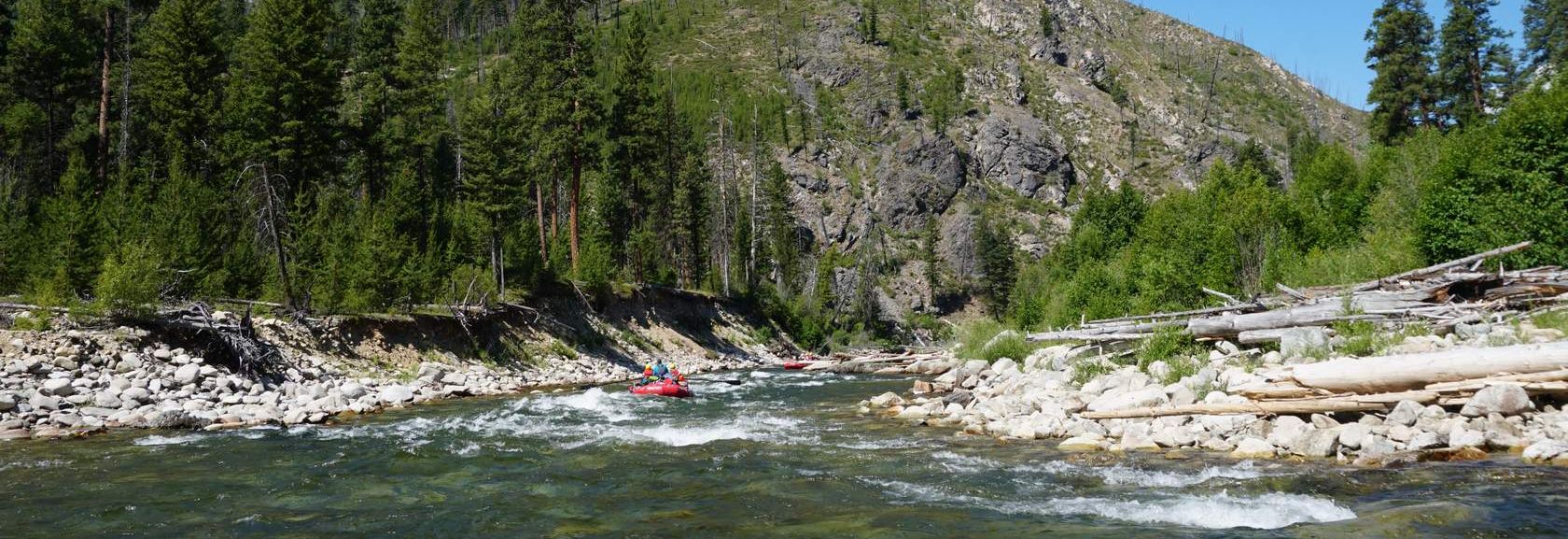
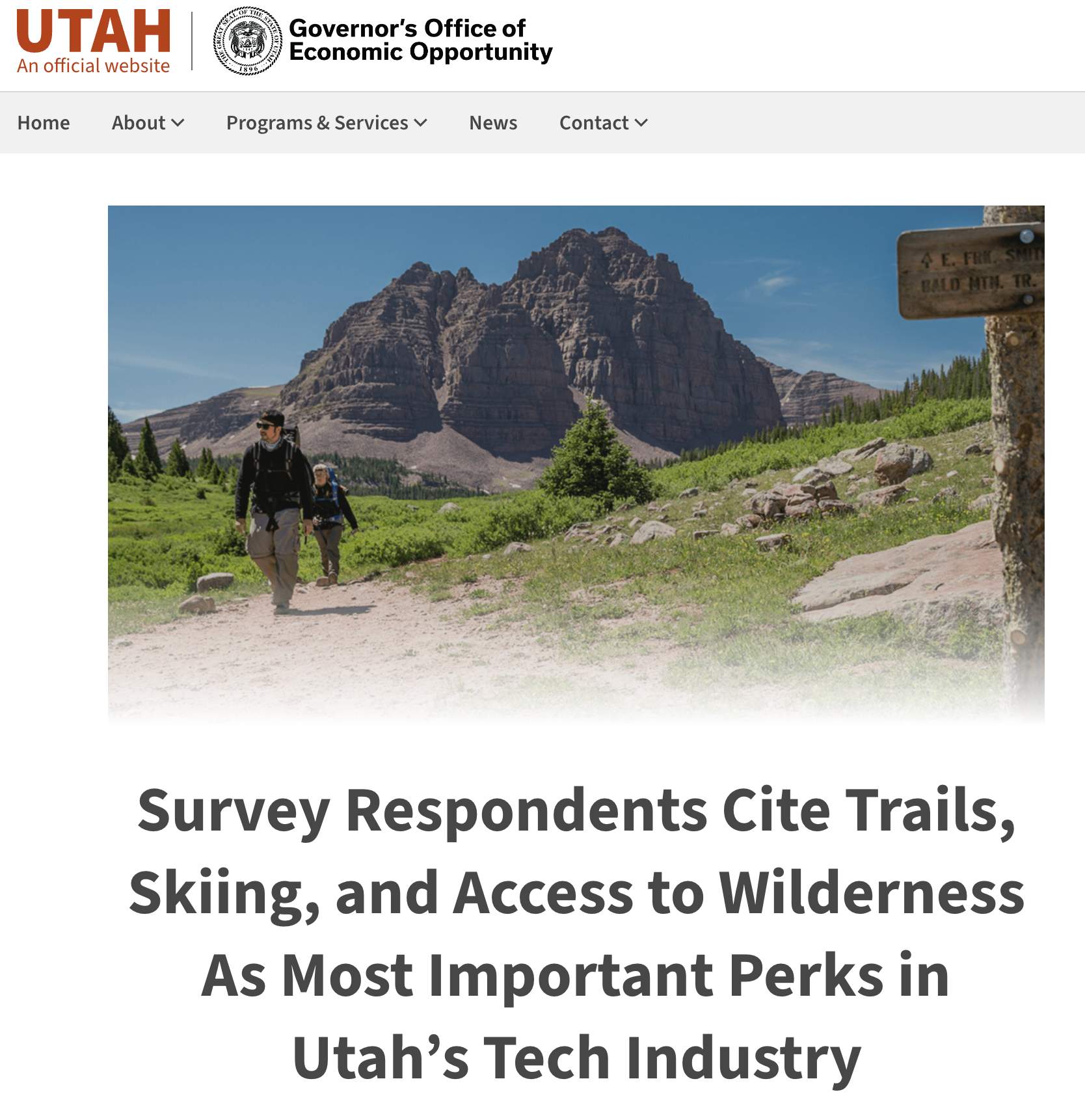
Messaging around the economic benefits of outdoor recreation should close the divide between outdoor recreation and economic development by focusing on the job-creating and job-supporting aspects of outdoor recreation assets.
Outdoor recreation access helps create new jobs in manufacturing, transportation and warehousing, finance, insurance, advertising, professional and technical services, among other sectors, and supports existing businesses with new clientele and increased economic activity.
"...The development of hiking and biking trails in Whitefish, Montana, resulted in 68 new local jobs and $1.9 million in labor income. That is in part from tourists who spend money in local shops, hotels, and restaurants. However, the trail system also leverages investment of local residents. Our research shows that locals who use the trails around Whitefish spend twice as much in local gear shops as those who do not use the trails. For every $1 spent on developing trail infrastructure, there was a $2.50 return to the local economy."
— Ray Rasker, Former Executive Director, Headwaters Economics, Congressional Testimony
In addition, many people choose to live and work in communities with a high quality of life and outdoor recreation opportunities. Therefore, outdoor recreation supports rural economies through both attracting new business development and retaining talent.
The benefits of outdoor recreation extend to the state, regional and local levels, and justify the development of outdoor recreation economies.
Research from Headwaters Economics demonstrates that outdoor recreation amenities:
- draw visitors who spend money at local businesses
- attract new talent and investment
- increase property values
- improve quality of life and public health, particularly in low-income neighborhoods
Recent research from the Daily Yonder using Bureau of Labor Statistics data shows that "rural counties where the recreation industry is a big part of the local economy are more likely than other types of rural counties to have regained the jobs they lost during the pandemic."
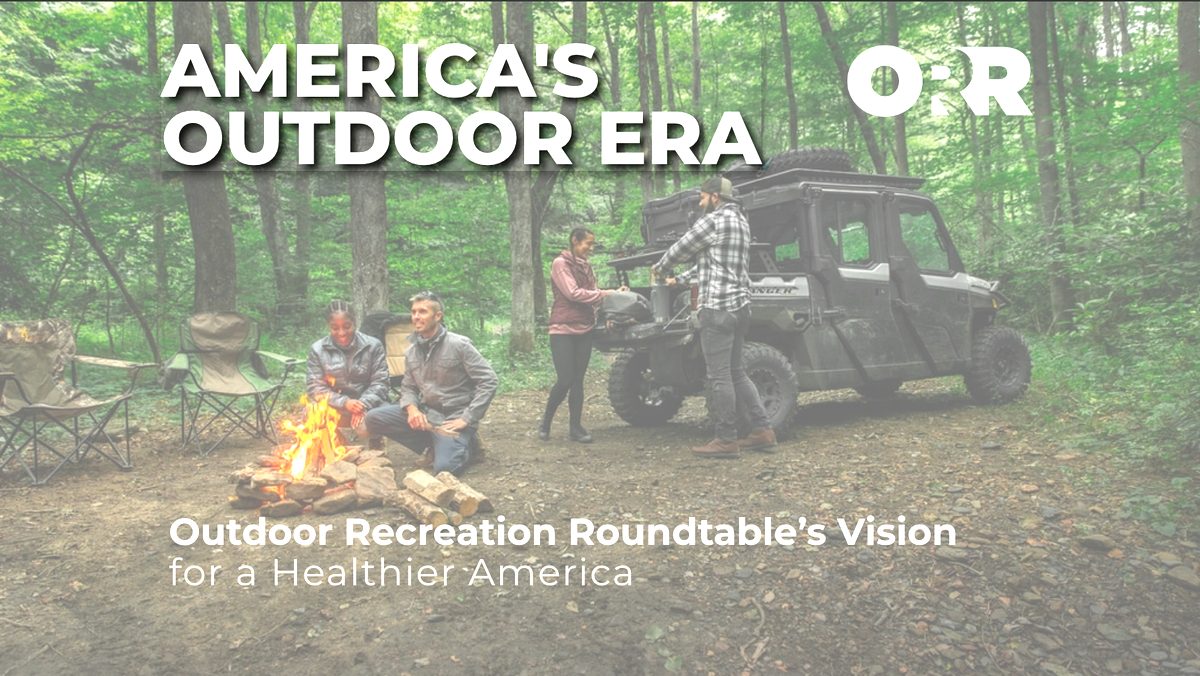
America's Outdoor Era: Outdoor Recreation as Health Infrastructure
One of America's greatest opportunities for public health intervention lies outside our front doors. As U.S. healthcare spending surpassed $5 trillion in 2024, ORR's America's Outdoor Era vision reframes outdoor recreation as essential health infrastructure, not just a pastime — a proven way to reduce stress, improve mental health, support healthy child development, and lower rates of chronic disease.
The need is urgent: up to 1 in 5 children and adolescents nationwide experience a mental health challenge, and in 23 states, more than one-third of adults live with obesity. ORR's vision lays out three pillars to close this gap:
- Infrastructure and Investment: Guaranteed funding and policy that ensures safe, affordable access to outdoor spaces for all Americans.
- Culture and Messengers: Shifting media, sports, retail, and education to mainstream time outside as core to health and American identity.
- Health Systems and Institutions: Embedding nature into healthcare settings, from clinical referral programs to employer benefits and insurance incentives.
On May 6–7, 2026, ORR convened the first National Executive Forum on Health and Outdoor Recreation in Washington, D.C. U.S. Secretary of the Interior Doug Burgum joined outdoor recreation and healthcare CEOs and policymakers to advance these solutions.
Communities and partners across the country are already putting this connection into practice:
- Measuring benefits for veterans: Heroes on the Water has partnered with Texas State University on a pilot research program, running September–October 2026, that measures stress-related biomarkers in veterans before and after therapeutic kayak fishing — building on the organization's existing research into participant-reported outcomes.
- Trails as everyday exercise: In the University of Nebraska–Lincoln's 2026 Nebraska Rural Poll, exercise or fitness was the most-cited reason rural Nebraskans gave for using trails, at 60%.
- Outdoor access in substance-use recovery: Pennsylvania's Recovery in Nature initiative, a partnership between the state's Department of Drug and Alcohol Programs and Department of Conservation and Natural Resources, highlights accessible trails and waterways in state parks and conservation areas for Pennsylvanians in recovery from substance use disorder. In its third year, the initiative expanded in 2026 to include veterans in recovery.
Part of the argument we are trying to make is that seeing the economy through the lens of outdoor recreation and quality of place benefits you even if you’re not in the downtown area — it increases talent attraction and the likelihood that businesses will want to come to your community.
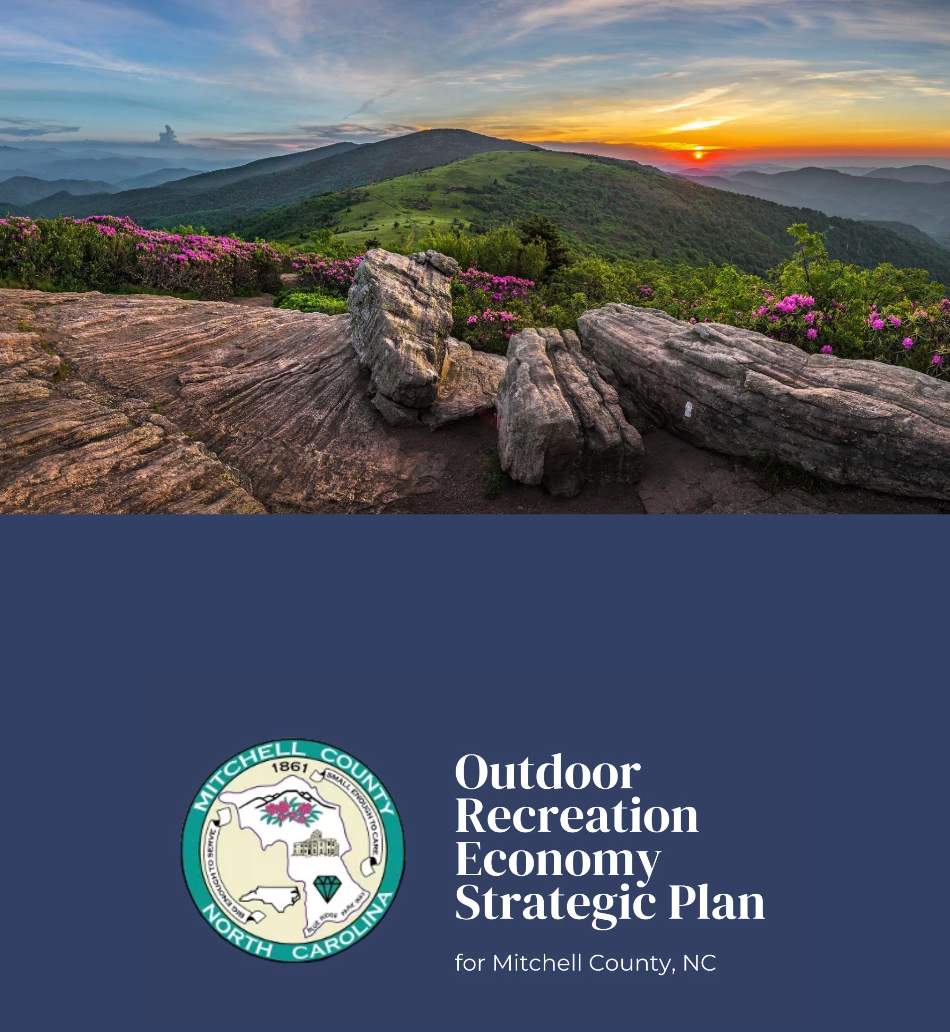
As with any economic development initiative, it is important that the success of the initiative is not too closely tied to one individual but rather is inscribed in a community plan to carry on after their departure. Good examples can be found below:
- Mitchell County, NC, whose Outdoor Recreation Economy Strategic Plan maps the county's outdoor recreation assets along with relevant businesses in order to identify gaps in assets and resources
- Katahdin Region Recreational Investment Strategy, which aims to foster vibrant villages that enhance the region, and make the region a premier four-season outdoor destination
- Michigan Region 2's Comprehensive Economic Development Strategy, which describes attracting talent via the development of an outdoor recreation economy through preservation-minded leveraging of the region's natural and man-made recreation resources
The thing about growing unique local businesses and recreation amenities is not only are they an economic engine in themselves, they also make a community - and the major employers located there - more competitive.
It's about the people. The physical, emotional, and mental health benefits of outdoor recreation are proven. Outdoor recreation is a great way to engage families, especially youth which builds a sense of normalcy and belonging in the outdoors. Greater overall physical health and strong mental/
emotional health reduces demands on a community and fosters a culture of inclusion.
We have been trying to focus on family units and it’s been awesome. Instead of classrooms, we bring a core group of kids, cousins, and parents into the outdoors. That turned out to be practical from a COVID perspective." After they leave the program we hear anecdotal stories like kids telling their parents to stop the car because they see a bird and want to find out what it is. We’re creating intergenerational shared experiences and cross-generational programming.
Live, Work, Play, and Stay — These are the four aspects of outdoor recreation a community must focus on to enhance its place branding.
I don't say, "Hey, there's a new future for you in Deer Lodge"-- instead I encourage communities to build on assets they already have and recognize that.